In EVA photovoltaic film production lines, melt gear pumps fulfill the core functions of “maintaining stable flow, maintaining stable pressure, and preventing degradation.” As critical equipment, they ensure high transparency, high consistency, and high yield rates in the film, directly determining the optical performance and service life of the photovoltaic film while meeting the stringent requirements for long-term outdoor operation of photovoltaic modules.
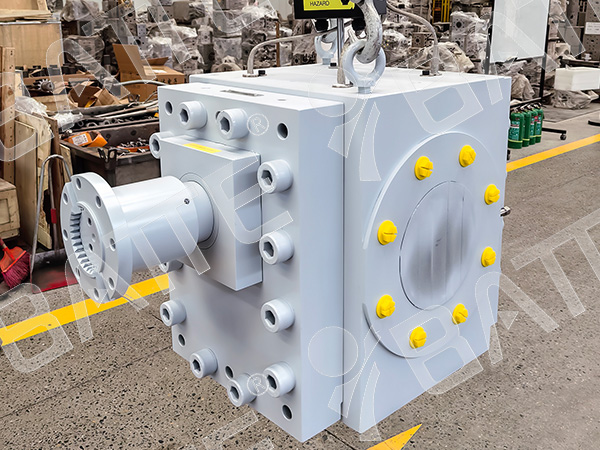
I. The Core Role of Melt Gear Pumps in EVA Photovoltaic Film Production Lines
1. High-Precision Metering: Laying the Foundation for Film Uniformity
Leveraging the precision meshing structure of high-precision gears, melt gear pumps achieve quantitative and stable delivery of EVA melt. Flow control accuracy can reach within ±1%, eliminating issues such as uneven film thickness and basis weight deviations caused by fluctuations in extrusion flow from the source. This ensures high consistency in thickness, density, and performance for every roll of film, meeting the standardization requirements for large-scale production of photovoltaic films.
2. Pressure Stabilization and Boosting: Completely Eliminating Film Surface Defects
Acting as a “pressure stabilizer” between the extruder and the die, the melt gear pump effectively compensates for pressure fluctuations caused by variations in plasticization and extruder speed. It strictly controls die inlet pressure fluctuations within ±0.5 MPa, significantly reducing surface defects such as “clouding,” pitting, and streaking in the film. This enhances the film’s light transmittance and ensures the photovoltaic conversion efficiency of solar modules.
3. Reducing Extruder Load for Dual Benefits of Energy Savings and Efficiency
By actively handling melt pressurization, the melt gear pump allows the extruder to operate under low backpressure and low load conditions. This not only reduces overall line energy consumption by 15%–30% but also effectively minimizes wear on the screw and heating systems, extending equipment lifespan, improving production line stability, and lowering maintenance costs.
4. Enhancing Process Flexibility to Meet Customized Production Needs
By precisely adjusting the speed of the melt gear pump, production specifications for films of different thicknesses and widths can be switched quickly, significantly improving changeover efficiency without the need for cumbersome adjustments to the entire line’s parameters. This is particularly well-suited for customized photovoltaic film production scenarios involving multiple varieties and small batches, thereby enhancing the company’s production flexibility and market competitiveness.
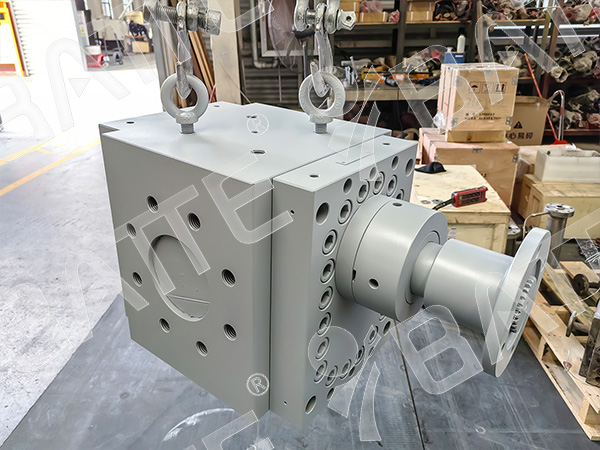
II. Key Technical Features of Melt Gear Pumps Designed for EVA Photovoltaic Film Production
1. Dual Temperature Control System (Electric Heating + Circulating Water Temperature Regulation) to Prevent EVA Degradation
EVA material is extremely sensitive to temperature; high temperatures can easily cause oxidative degradation, which affects the performance of the film. The melt gear pump employs a dual-temperature control design featuring “external electric heating + internal circulating water temperature regulation.” External electric heating enables rapid temperature rise, while internal circulating water ensures precise temperature control, guaranteeing uniform and stable overall pump temperature and effectively preventing EVA degradation caused by localized overheating.
2. Temperature-controlled water channel design for gear shafts, precisely suppressing shear heat
High-speed gear meshing generates significant shear heat, which can easily cause carbonization and degradation of the EVA melt inside the pump. A dedicated circulating water channel is designed within the pump’s gear shafts to precisely cool the gear meshing area, removing shear heat in real time. This ensures melt purity and prevents impurities from affecting the optical performance of the film.
3. Dead-End-Free Flow Paths + Mirror-Polished Surfaces to Reduce Melt Dwell Time
The flow channels within the pump body undergo precision mirror polishing, achieving a surface roughness of Ra 0.2 μm. With no dead zones where melt can accumulate, the residence time of the EVA melt within the pump is minimized, reducing the risk of thermal degradation. This also prevents the growth of impurities from residual melt, ensuring the high transparency and purity of the film.
4. Helical gears with nitriding treatment, suitable for corrosive EVA environments
The helical gear design ensures smoother operation and gentler shearing action compared to spur gears, thereby reducing mechanical damage to the EVA melt. To address the highly corrosive nature of the acetic acid components in EVA, the gears are recommended to be made of nitrided steel. After undergoing professional nitriding treatment, the gears’ corrosion resistance and wear resistance are significantly enhanced, extending the equipment’s service life.
5. Maintenance-free spiral seal, ensuring pure and contamination-free melt
A maintenance-free spiral seal structure replaces traditional packing seals, completely eliminating contamination of the EVA melt by debris caused by seal wear. This ensures the optical performance and bonding strength of the film while reducing the frequency of seal replacements, thereby lowering equipment maintenance workload and costs.
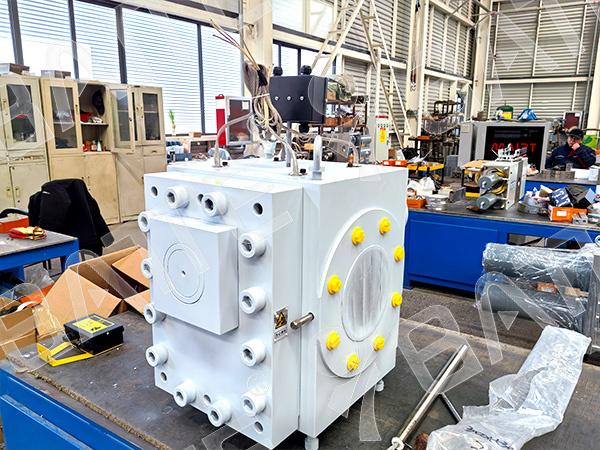
6. Modular design for quick maintenance and repairs
The system features a modular design that facilitates efficient disassembly and maintenance, significantly reducing equipment downtime. This enhances the continuous operation capability of the photovoltaic film production line and minimizes production losses caused by equipment failures.
Email: sale@meltpump.com
WhatsApp: +86 158 3833 1071
pre:Extruder Melt Pump in High-Precision BOPP Film Production
next: The Differences Between Melt Pumps, Melt Gear Pumps, and Gear Pumps


 TEL:+86 371 67991755
 WhatsApp: +86 158 38331071
 Adress: No.22 Dongqing Str., High & New Technology Development Zone, Zhengzhou, China.
