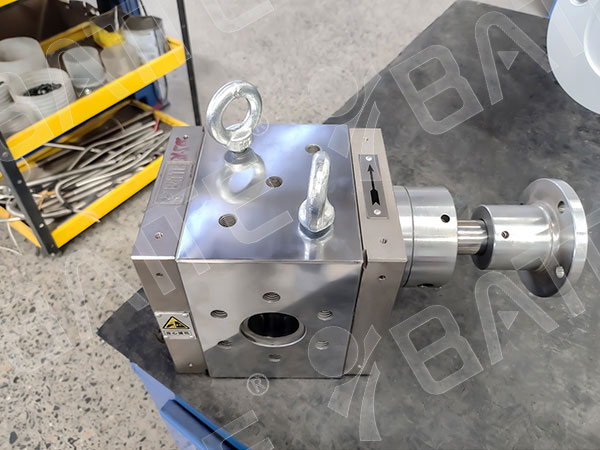
As critical pressure-stabilizing and metering equipment in polymer extrusion systems, melt gear pumps are widely used in high-end processes such as precision film production, chemical fiber spinning, and pelletization and modification. By stabilizing melt pressure and precisely controlling flow rate, they enhance product precision and production continuity at the source, making them indispensable core components of modern, high-efficiency extrusion lines.
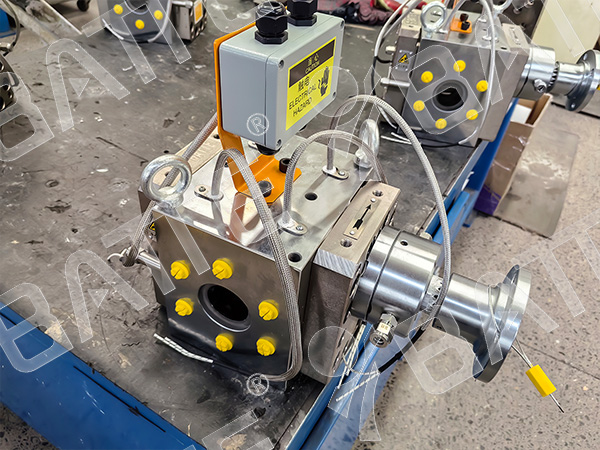
I. Typical Process Applications
1. Precision Film and Sheet Extrusion
In the production of high-end products such as CPP cast film, PVB interlayer film, and optical-grade PC sheet, melt gear pumps serve as the critical link between the extruder and the T-die. Their core functions are twofold: First, pressure stabilization and homogenization—they precisely control pressure fluctuations at the extruder outlet (±10%–15%) to within ±1%–2% at the die inlet, significantly improving product thickness uniformity; Second, pressure-boosting delivery, which effectively overcomes the 5–10 MPa pressure differential at the screen changer and resistance in the melt piping, ensuring that the pressure at the die inlet is maintained stably within the process range of 15–25 MPa. The standard process flow is: extruder → screen changer → melt pump → dynamic mixer → die.
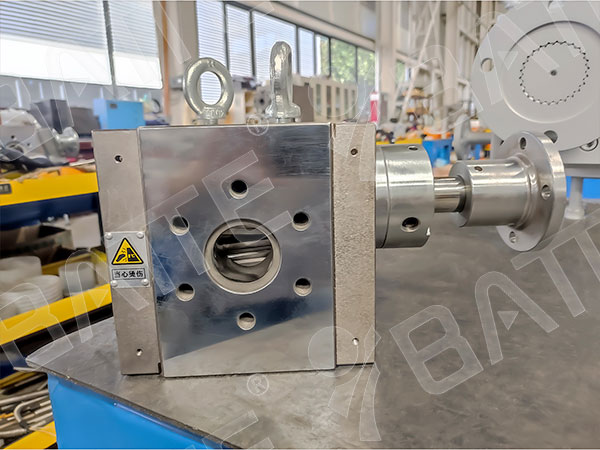
2. Synthetic Fiber and Nonwoven Spinning
Spinning processes for polyester, nylon, and polypropylene filaments, as well as melt-blown nonwovens, place extremely high demands on melt flow rate and pressure stability. Commonly referred to in the industry as melt metering pumps or spinning pumps, these units feature precise displacement ranging from 0.5 to 30 cc/rev, enabling constant melt flow delivery. The equipment offers high controllability of operating parameters: operating temperature of 280–320°C and outlet pressure of 8–20 MPa, ensuring that the deviation in filament output per orifice is less than 1% and meeting the demands of high-quality spinning.
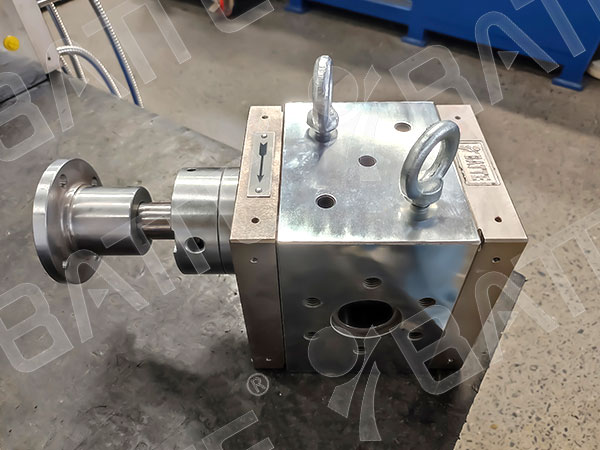
3. Pelletizing and Recycling/Modification
In two-stage extrusion pelletizing production lines, the melt gear pump serves as the core unit, converting the fluctuating melt output from the upstream extruder into a stable, high-pressure flow suitable for systems such as underwater pelletizing and strand pelletizing. For highly filled materials containing calcium carbonate or glass fiber at levels exceeding 50%, as well as high-viscosity recycled and modified materials, the pump employs carbide bearings and a specialized gear tooth profile, offering excellent wear and corrosion resistance to ensure long-term stable operation under harsh conditions.
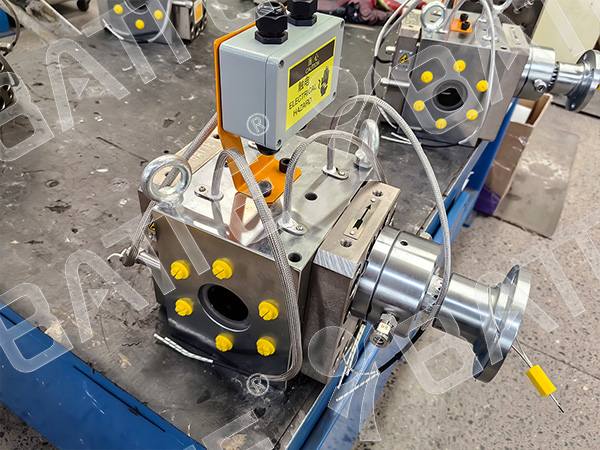
II. Application Value and Advantages of Melt Pumps
Installing a melt gear pump delivers tangible and measurable performance improvements for extrusion production lines:
Quality Improvement: Die pressure fluctuations are reduced by more than 90%, and product thickness tolerances are controlled within ±1.5%, effectively reducing surface defects such as crystallization spots, flow marks, and uneven thickness.
Increased Production Capacity: The extruder focuses on plasticization and operates under low backpressure and low torque conditions, reducing energy consumption; stable high-pressure output is compatible with high-resistance precision dies, resulting in an overall increase in production capacity of 15%–30%.
Cost Savings: Reduced scrap rates and waste from startup and commissioning, lower load on the main unit, and extended service life of the screw, barrel, and drive system.
Process Optimization: Improved tolerance to raw material fluctuations, enhanced production continuity and stability, and easier implementation of automated and intelligent control on production lines.
Email: sale@meltpump.com
WhatsApp: +86 158 3833 1071
pre:Rubber Extrusion Melt Pump: Key Equipment for Stable Rubber Extrusion Production
next: Melt Pump for Rubber Extruder: Core Component for Stable Extrusion


 TEL:+86 371 67991755
 WhatsApp: +86 158 38331071
 Adress: No.22 Dongqing Str., High & New Technology Development Zone, Zhengzhou, China.
