The melt gear pump is a core precision conveying equipment in production lines such as plastic extrusion, film processing, and chemical fiber spinning. It primarily plays a crucial role in melt pressure stabilization, precise metering, and constant pressure conveying, directly determining the production precision and product yield of the production line.
Due to the continuous operation of equipment under harsh working conditions of high temperature, high pressure, and high viscosity for a long time, long-term wear and tear can easily lead to various failures such as flow attenuation, pressure fluctuations, abnormal equipment noise, gear wear, excessive fit clearance, and melt leakage. Once a problem occurs, it will not only cause unstable production conditions and uneven material discharge, but also significantly increase energy consumption, reduce product quality, and even lead to production line downtime and production suspension.
When repairing a melt gear pump, it is crucial to avoid blind disassembly and random repairs. It is necessary to follow standardized and refined professional repair processes to fully restore equipment wear and tear, accurately restoring the original operating accuracy and stability performance. The following are six core standardized repair processes commonly used in the industry, which fully replicate the factory state of the equipment.
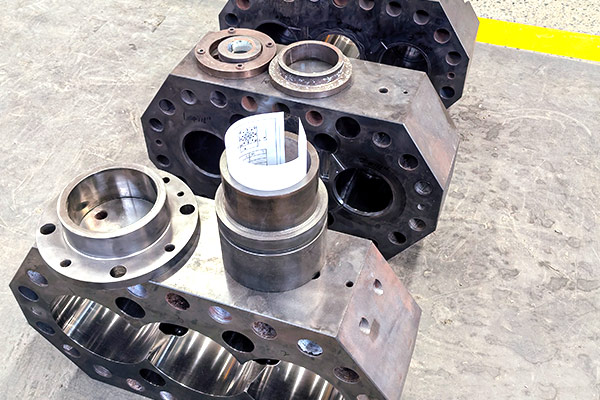
1. Shutdown preprocessing: reduce safety risks and avoid damage during disassembly and assembly
Pre-treatment before maintenance is a fundamental step to ensure maintenance safety and enhance repair quality. Firstly, it is necessary to standardize the shutdown and cooling process, ensuring that the overall temperature of the equipment drops to a safe range, thereby eliminating issues such as burns and component deformation caused by high-temperature operations. Subsequently, the residual melt inside the pump body should be completely drained. For solidified and adhered residual materials, they should be cleaned up by softening them through low-temperature heating, to prevent hard residual materials from jamming precision components.
Finally, remove the inlet and outlet pipelines, wiring, and other supporting components. Meanwhile, make alignment marks on all pipelines and connectors to avoid misalignment during subsequent assembly, laying a good foundation for subsequent disassembly and assembly work.
II. Orderly dismantling: standard dismantling, retaining original data
Melt gear pumps are high-precision equipment, and disassembly without proper order can easily cause component damage and loss of precision. Disassembly must strictly follow the principle of dismantling from the outside to the inside, step by step, in the order of front and rear cover plates, positioning components, gears, bearings, and seals.
Maintain detailed records throughout the entire process, accurately preserving core data such as the installation position, installation direction, and original fit clearance of various parts. Classify and neatly store parts that are prone to confusion and wear, to prevent parts from being mixed up or installed incorrectly, providing a precise basis for subsequent accurate assembly.
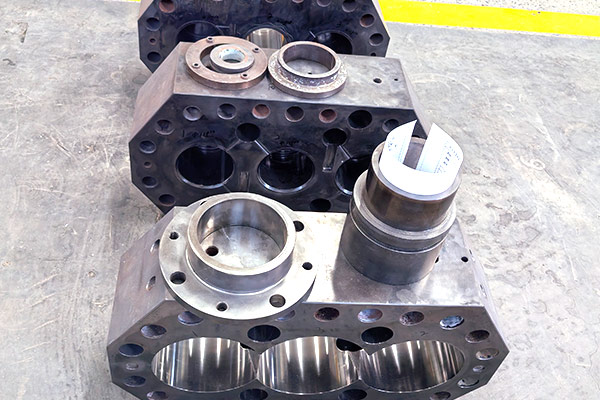
III. Precise detection: comprehensive investigation and accurate determination of wear and tear
Inspection is the core step for accurately locating faults and determining maintenance plans, directly determining the final maintenance outcome. It is necessary to conduct comprehensive and precise inspection on all disassembled components, with a focus on checking core precision parts:
Gear: Inspect the meshing surface, tooth tip, and tooth root for defects such as wear, pitting, strain, and tooth fracture, and measure the gear's coaxiality and meshing accuracy;
Pump body and side plate: Inspect the inner wall and friction surface for wear, scratches, and deformation, and test the fit precision of the cavity;
Bearing: Inspect the smoothness of rotation, wear clearance, and ball loss, and troubleshoot potential issues such as stalling and abnormal noise;
Seals: Inspect for signs of aging, deformation, damage, and hardening, and predict potential leakage risks.
Through meticulous inspection, we can comprehensively assess the degree of component wear and tear, distinguishing between repairable parts and those that need to be scrapped and replaced. This approach ensures that defective assemblies and superficial repairs, which only address symptoms rather than the root cause, are avoided.
IV. Part cleaning and repair: Fine processing to restore component precision
All disassembled parts must be thoroughly cleaned to completely remove residual melt, oil stains, impurities, and oxide layers from the surface, ensuring that the component surface is clean and free of foreign matter. For precision components with minor wear, fine scratches, and minor strain, professional processes are used for refined repair, including grinding and leveling, and repairing damaged surfaces.
Core taboo: It is strictly prohibited to conduct blind grinding and violent finishing on core precision components such as gears, pump bodies, and bearings, to avoid damaging the original precision of the components, causing irreversible damage, and leading to permanent degradation of equipment metering and pressure stabilization performance.
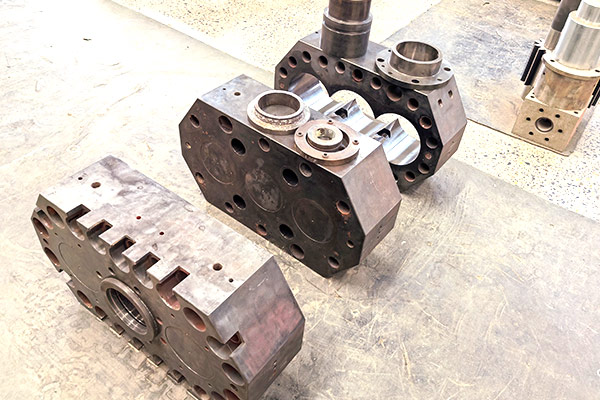
V. Precise assembly and gap adjustment: benchmarking against original manufacturers, strictly controlling fit accuracy
The assembly process strictly adheres to the original factory's technical standards, and each component is reset and installed step by step according to the recorded installation parameters and position data. The core focus is on clearance calibration, precisely adjusting key parameters such as gear mesh clearance, bearing fit clearance, and end face seal clearance to ensure that all fit clearances meet the original factory standards.
After assembly, manually rotate the pump several times to test its operation. Ensure that the pump body rotates flexibly, without any stagnation, abnormal noise, or deviation. The sealing structure should be tightly fitted and not loose, ensuring stable operation of the equipment.
VI. Complete Machine Performance Testing: Rigorous verification, only qualified products can be put into production
After the maintenance and assembly are completed, the equipment cannot be directly put into production. Instead, a comprehensive performance test of the entire machine is required. By simulating production conditions, core indicators such as equipment operating pressure, flow stability, rotational smoothness, operating temperature rise, and sealing performance are tested one by one.
All parameters must fully comply with the original equipment standards, without issues such as pressure fluctuations, flow deviations, abnormal noises, or leaks. Only after confirming that the equipment meets the standards in terms of accuracy, stability, and durability can it be officially put into use on the production line.
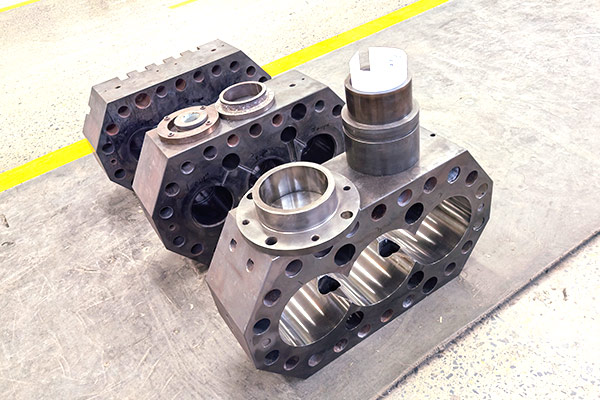
The core of maintaining a melt gear pump lies not in "repairing damaged parts", but in controlling the standardized process and restoring precision. Only by strictly following the full-process specifications of pre-treatment, disassembly, inspection, repair, assembly, and testing can we thoroughly solve equipment failures, effectively restore the original factory's pressure stabilization, metering, and conveying performance for a long time, effectively reduce equipment failure rates, and ensure efficient, stable, and low-cost operation of the production line.
Email: sale@meltpump.com
WhatsApp: +86 158 3833 1071
pre:Melt Pump Application in PP Modified Plastic Granulation Production Line


 TEL:+86 371 67991755
 WhatsApp: +86 158 38331071
 Adress: No.22 Dongqing Str., High & New Technology Development Zone, Zhengzhou, China.
